dibujo: Pablo Temes, 2012
Mostrando entradas con la etiqueta Buenos Aires Herald. Mostrar todas las entradas

jueves, 5 de julio de 2012

Argentina: the past won’t stay away (I)

Buenos Aires Herald
Monday, july 2, 2012       


LIBROS:                         
DISPOSICIÓN FINAL
La confesión de Videla sobre los desaparecidos
Ceferino Reato


Former Herald editor reviews a recently published book and essay, reminders that the desaparecidos remain at the forefront of Argentine's minds and that answers are still needed.

by Andrew Graham - Yooll
for the Herald


Nearly four decades after the military coup of March 1976 in Argentina society has still not come to terms with its recent past. The intellectual conviction is that societies have to assimilate the past to be able to bury it in the history books, but this has not yet happened.  A recent book hinted at the possibility of change, but early optimism sank rapidly.  The book, by journalist Ceferino Reato, editor of Fortuna magazine, researches into the dark corners of the seventies, and provides a cold and cruel description of the military plan to murder thousands of opponents as told in nine interviews by an imprisoned former dictator. 
Argentina’s dictatorship held power between 1976 and 1983. Although this was the shortest dictatorship of all those in the region the rule of the Junta of three armed forces chiefs was the bloodiest, the only one that had a systematic plan to detain its captives in secret camp and make them disappear.  Thus Argentina gave the word “desaparecidos”, in Spanish, to the language of repression. Political groups and human rights organizations set the figure of disappeared at 30,000. But this has been a projection, not backed by the recovery of remains and identities.
            In  Disposición Final, published by Sudamericana, author Ceferino Reato secured a chilling narrative from the dictator, now 86, who is serving life imprisonment. “Let’s say there were seven or eight thousand people who had to die to win this war: we could not execute them. How could we execute so many people?” says Videla.  “We never used the phrase ‘Final solution’. ‘Final Disposal’ were the words most used; those are two very military words that refer to taking something useless out of service. When, for example, one speaks of clothing that is used no longer or is too worn, it goes under Final Disposal. It no longer has a useful life.”

The statements made by Videla now go a long way to help explain the failings of a society that allowed and even cheered the murderous military dictatorship that began in 1976. “Yes, but the guerrillas started killing first,” was often the rejoinder we got at the Buenos Aires Herald when editorially critical of the uniformed rulers. The guerrillas were not first, they were the product of the failure of constitutional government, of a whole society that considered itself the most modern and intellectually advanced in South America.  The armed forces, formed into the most powerful party in the country since the 1930s, had hampered, disrupted and overthrown elected governments at will. Wrecking an elected government should have been considered a crime.  And, we argued from the pages of Argentina’s smallest daily, in English, “the State cannot descend to the level of its enemies, because killing people is wrong, whoever does it.”  We did not get very far with that argument.  When I quietly admitted to people that I had been an informant for Amnesty International since 1971 and writing for  Index on Censorship since 1973, the ensuing question was, “Yes, but what side are you on?” You had to take sides in the politics of a country that was descending into horror.
           “To avoid arousing protests in or outside the country, we reached the decision that those people had to disappear; each disappearance can be understood as a certain masking, a disguise of a death,” Videla told Ceferino Reato. 
The former dictator admitted to Reato that there were “mistakes and excesses” but that was not the case “with the disappeared”, whose fate was part of a policy. The “responsibility in each case fell to the regional commander, who used the method he thought most appropriate. Each commander had full autonomy to find the quickest and least risky method. Nobody was against that… I was not consulted.  I consented by omission.”  Elsewhere, Videla said, “each commander was master and ruler over the life and death of each detainee.” And the method for disposing of bodies, that sinister “Final Disposal”, was equally the responsibility of unit commanders, no questions were asked among senior officers. They could bury the dead in mass graves, burn them in a stack of tyres, destroy them with lime.
Videla denies that there was, “an order to abduct minors. There were cases, I know, but they were the result of our lack of controls, there was no systematic plan to steal babies” (**) from captured mothers. The military handed over 227 children of captives to neighbours or relatives or to juvenile courts. But the Grandmothers of Plaza de Mayo, who campaign for the restoration of young people whose identities were stolen through abduction (“appropriation” is the word they use) originally estimated that there were nearly 600 children missing.  The figure claimed is now closer to 400, and just over one hundred have recovered their original family names, lost in forced adoptions.  However, the Grandmothers gave the figure of 190 children disappeared along with their parents on their official web on December 24, 2011.

When Reato’s book was published in mid-April 2012, the statements appeared to some to be the first signal of an aged former president and army commander wanting to come clean with the country he had presided over for five years (1976-1981).  He even seemed to regret the terror.  However, by May 2012, it was obvious that the aging monster had agreed to talk on the record to say that he had been the boss when the military decided that the nation had to be saved from the subversive menace (Marxist and nationalist Peronist guerrillas).  For those most ingenuous Videla could be about to produce the documents that recorded the military crimes (officially, they were destroyed in 1983, just before the elections, under orders of the last de facto chief, general Reynaldo Bignone, now in prison). But that idea was demolished by a letter from Videla to the conservative newspaper La Nación, published  on May 21, rejecting some of author Reato’s passages.  Videla claimed that he had said, “according to reliable figures, seven or eight thousand had died.”  He further added, “Mind, I do not regret a thing and I sleep soundly and at peace every night.”...
However, we still have a long way to go for an answer as to what happened in the seventies.

** In spite of his denial, on 4 July, 2012, a court sentenced Videla to 50 years in prison for planning and executing a systematic plan to remove and hide babies born in captivity.

Argentina: the past won’t stay away (II)

Buenos Aires Herald
monday, july 2, 2012.   
   
LIBROS:
       De la culpa al perdón
Cómo construir una convivencia democrática
sobre las intolerancias del pasado.
Norma Morandini


Former Herald editor reviews a recently published book and essay, reminders that the desaparecidos remain at the forefront of Argentine's minds and that answers are still needed.

by Andrew Graham-Yooll
for the Herald.
 
If Argentina’s people are really intending to live in peace, we must be prepared to understand what happened to us in the seventies and before, and admit our share of responsibility.  Admission of this will take us to a measure of self-compassion and forgiveness.  That is the main message of an essay by a journalist and now a senator in Argentina’s congress, Norma Morandini.  She should know, her two younger siblings were “disappeared” in September 1977.
Norma Morandini’s recently published essay is a stream of personal and moral exploration and a search of Argentine society to try to explain recovery from a state of denial. It is a revealing account. Her own story begins in comfortable middle class Córdoba, then moves through the loss of those dear, exile, and from a distance she sees her mother grow out of grief, first, then enter battle to seek her lost children as one of the Mothers of the disappeared.  The next stage in Norma’s life as a journalist is a return to Argentina, guilt-ridden for having survived, rejected for jobs and discriminated against for having dead or “disappeared” members of her family, finally to re-invent herself as a campaigner for a new culture  and to enter politics.
Morandini’s  book, De la culpa al perdón, published by Sudamericana; is a painful personal essay written ten years ago, only published now. It has a challenging sub-heading, “How to build an open society above the intolerance of the past”.  The idea of forgiveness for the dictators of the past prompted an irate reader of Clarín’s Ñ cultural weekly to write in reply to a review and refuse compassion and pardon “for the criminals” of the dictatorship.   But Senator Morandini is not suggesting we all go into an exercise of religious pardon of the sins of the monsters.  She does propose that each one put their feelings in the balance and try to come to terms with their past as a necessary step into the present and beyond.
Senator Morandini said, “During the trial of the Juntas in 1985 the figures and statements of the victims were usually put in doubt.  For example, in those long hard six months of the trials of the Juntas, former captives said that prisoners were drugged, tied, and dropped into the sea. Nothing happened. It was more than ten years later when the executioner, naval officer Adolfo Scilingo confessed to Judge Baltasar Garzón in Spain, that the account of the bodies thrown from planes was true. Then it was believed. Human behavior makes it reasonable to give credit to the killer but not the victim…” There is no reason to accept Videla’s figures that “seven or eight thousand had to die”, Morandini argued.
“(In Argentina) we are a country that has not had a state policy to deal with events in our recent past.  Our education does not include the construction of a culture of human rights.” These two sentences in part define the aim of Morandini’s book, to develop a democratic “society above the intolerance of the past.” 
“We have had thirty years of democratic formalities and we do not have democratic values.  This is because society has leaders who do not want to recognize their part or the role of their parties in the civic failure that led to the worst dictatorship in our history.   Here people are still trying to convince themselves that we are a peaceful nation without admitting we were cutting each others’ throats throughout the nineteenth century and killing people because we didn’t like what they said in the twentieth. 
“We have not been able to see the difference between guilt and responsibility."  
Morandini has not lost hope for recovery.  “For the first time in decades we are beginning to look at ourselves, our own mistakes.  This change is coming from a new generation, the youngest, the children, and even grandchildren of the activists, sometimes utopian, and the disappeared of the seventies. This makes me feel we are on our way to a political culture that includes responsibility.  At present we still have many bad old habits. We look at the crises in Europe and delight in their suffering, seeing it as a failure.  What we don’t see in their plight is also that the protesters are demanding more democracy.” 
“We have to find a balance somewhere between being sucked down into evil which destroys us and choosing departure, escape, which robs us of the humanity needed to overcome.  It is a difficult balance.  The book has ‘washed my soul’ as the Brazilians say. 

We must try to learn the concept that one man is all men, the behaviour of one belongs to us all.” 

* http://www.buenosairesherald.com/article/105077/argentina-the-past-won’t-stay-away-

martes, 5 de junio de 2012

Successful update of a tragic classic

Buenos Aires Herald, Tuesday, 5 June 2012.

García Lorca’s Yerma,
by Andrew Graham-Yooll
for the Herald

For theatre-goers of a certain age, mention Federico García Lorca’s play Yerma (1934) and not a few refer to the dramatic performance of Spanish actress Nuria Espert whose company staged the piece in 1971. The show, though only 40 years ago, was ground-breaking because of the defiance entailed: that opening happened when the “generalissimo” Francisco Franco was finally admitting he could not outlive an elephant.  What people probably remember as much was that Espert (1935) flipped open her clothes on stage to reveal some very white flesh while the ancient monster’s censors were still around. That too was defiance.
In conversation with the actress Malena Solda, who plays Yerma in the new staging at the Cervantes Theatre (Av. Córdoba and Libertad, tickets at 50 pesos), she shrugged off the reference to Nuria Espert heard several dozen times. The drama opened last Thursday and plays Thursdays through Sundays during June. Try to see it, you will be richly rewarded. Solda, and director Daniel Suárez Marzal obviously, wanted to show that a new Yerma was possible and could still be relevant.  It is. Malena Solda, at times waif like for such a powerful role, shows a deeply distressed character trying to produce the child that a backward rural Spanish society expects of her.  García Lorca presents a woman who feels that her mission in life is to bear a child. The pain of her failure might prompt the thought that the subject is out of date in today’s post-yuppie society. It is not. 
Yerma, which in Spanish means uninhabited, bare soil, barren in the case of the young woman in the play, is married to Juan (played by Sergio Surraco), an ambitious sheep farmer whose father arranged their marriage. For her it is a loveless match.  She only wants children from her spouse, to reproduce like the other women in the village.  Juan cannot conceive, he is not interested in having children. Federico García Lorca (1898-1936) sets several timeless critical points: one, that it is the man’s impotence that thwarts the woman’s desire for a child. We understand the woman to be fertile, whereas the conviction in a bygone society – especially in a close, backward and remote rural group –  put the weight of failure to conceive on the woman, not on the man.  It is Yerma’s sense of honour that prevents her getting laid with passing merchants or minstrels in a gypsy fair, or even seeking the contribution of an old flame (Victor, played  by Pepe Monje) who had once made her skin tingle.  She wants her unloved husband to deliver. The clash within her is one of instinct versus repression. A woman without child is only a scrap of humanity, she says. She does not envy the other women in the village, she says, she is burdened by a sense of poverty, a feeling that clashes with the material comfort her husband offers her. In her frustration, Yerma kills her husband and in her fantasy the dead man in his infertility becomes her son. This scene, at the end, is difficult, because Yerma finishes off the lad rather quickly.
         Malena Solda is great, and there is no quibble, but she seems a frail figure and would have sounded better if she could have expressed her indignation at the unfairness of fate with greater force.
        García Lorca’s symbolism comes across strongly as he resorts to sense and surroundings to depict fecundity betrayed.  The rain is at once cleansing and a cause of fertility, as is the woman’s daily pilgrimage to the village fountain where her fingers draw ripples of life. The warm milk she wants to feel flowing from her breasts represent maternity and the flowers she sees growing in the garden celebrate absent joy.  Another point for debate is Yerma’s virtual rejection of the idea of children as a product of love: they are the biological product of her body, the right and duty of woman, a physical necessity.  To transpose Yerma into modernity inevitably prompts controversy over whether a woman, a couple, who do not want children are “normal” or not, a spurious argument, and whether or not those couples who seek the assistance of expensive fertility drugs, test tubes and rented wombs are right to do so in an attempt to counter nature’s dictates.
García Lorca read excerpts from his play for the first time in March 1934 in Buenos Aires at a PEN writers’ association conference and dedicated the reading to actress Lola Membrives (1888-1969).  The show opened with a low profile but with a great actress, Margarita Xirgu (1888-1969), in December 1934 in Madrid, where the piece was seen as an advocacy for maternity.  Later, after García Lorca’s murder in 1936, Yerma was taken to Mexico, where it played to the exile Republican community, who saw in it a political statement of rebellion more than the intensely human drama the author had portrayed.  Other great Spanish actresses who have been Yerma include María Casares (1922-1996) and Aurora Bautista (1935), which meant Malena Solda, at 35, was competing against a formidable first division when she opened last Thursday. She played well.
The play is an enjoyable spectacle in spite of the tragedy, with Flamenco music (Sebastián Espósito), dancing (Maribel Herrera, directed by Omar Saravia) and song (Geromo Amador), emphasizing the remoteness and the tradition.  In the 90 minute show, director Suárez Marzal, who trained long and hard in Andalucía where he learned about flamenco and the gypsy world, at times had over thirty actors on stage, most of them quite young, which adds to the challenge and the pleasure of success.  Do see Yerma, it’s good stuff.

lunes, 14 de mayo de 2012

Insisting on hope amid the danger of despair

Buenos Aires Herald, Monday, 14 May 2012


Interview with David Grossman,
at the Lancaster Hotel (Thursday, 3 May)
by Andrew Graham-Yooll
for the Herald


      “I insist on hoping (for peace in Israel-Palestine). It is easy to despair. There are good reasons to believe there will be no improvement in the future. To be desperate is to declare that we have lost, that there is no chance. There has to be a place for hope.” Israeli writer David Grossman speaks like a wise man which makes him seem much older than his 58. Grossman has that problem, he sound like a sage. 
We met for an interview in Buenos Aires, but it was also a reunion and recollection of meeting a quarter of a century ago. We took part in chatty gatherings in London. The prospect of a stiff structure broke down when I told him that his hotel had something special: the English author Graham Greene stayed there when he visited Victoria Ocampo. This is where he started writing Travels with My Aunt. The Lancaster Hotel had linen sheets. 
“Graham Greene. What a coincidence. I’ve brought Travels with my Aunt with me. I read that thirty years ago, when it was first published in Israel. This is a coincidence. You’ve made my day. I know, we’ve met… the novelist Moris Farhi was there, the writers Bernice Rubens… Clive Sinclair,  Jaim Topol too. That was twenty six years ago.  We’re getting old.”  I assured him we were not: everybody else gets old, contemporaries never age. Grossman liked that. 
Grossman's father was a bus driver, then a librarian. Through him David built an interest in literature. His father, "gave me many things, but what he mostly gave me was Sholem Aleichem." Aleichem, born in Ukraine, is one of the leading writers in Yiddish, best known for the stories that inspired, Fiddler on the Roof.  Grossman’s novels include See Under: Love (1989), The Smile of the Lamb (1990), Duel (1998), among others.  His essays are Sleeping on a Wire: Conversations with Palestinians (1992), Death as a Way of Life (2003) and many more. He has three children, his son Uri was killed six years ago.
His new book, Falling Out of Time (not yet published in English; Más allá del tiempo, in Spanish), was launched at the BA Book Fair as Más allá del tiempo.  His writing has a combination of patience and hope…
Would he accept that description?
“It is my way of understanding my life.  That may be a limited definition. I like yours more. The act of writing is a combination of patience and hope.  It might take five years to write a book and you hope to be patient with yourself until things reveal themselves to you. You hope against all odds that things will improve, against all that reality teaches you.  You hope that there will always be an option of dialogue between people. That people might want to read the things I write in a small corner of Jerusalem and might understand them here in Buenos Aires and it will be relevant to their lives. You hope that beyond all barriers of place, of culture and language, people can still converse with each other.”
Do people converse with his writing?
“It’s a good question. I think they know that it is possible, that it is legitimate to ask for such a thing.  I remember that once I was asked about books that I have read. I turned the question round and asked to talk about books that have read me.  Books “read” every reader in a different way. This is the difference between journalism and literature. If one million people are reading the same newspaper, or watching the same news on CNN, there is something in the way the news is constructed to make us feel the same, think the same, glued together, we are made to feel the same.  I can talk about some newspapers in Israel. There is a mixture of facts and sentimentality, fact and kitsch. One million people reading the same paper each day will feel alike, they will denounce other groups, they feel superior to those others. But if ten thousand people are reading the same book at the same time, the book reads differently to each and every one. I can testify to that not only as a reader but as a writer from the letters that I get. The book plays so many roles in different contexts in the life of the readers. I never thought or planned it or imagined it possible. That is where I say the book reads the audience.” Were Israelis, as a society, poetry writers or mostly prose?

“They are more prose writers.” And yet, his last book, Falling Out of Time, is a mixture, it moves from poetry to prose and back.  
“I tend to agree, this novel is a mixture. Have you opened it?  Journalists don’t open books much… Well, you’ve only just been given it. My writing is poetic even when I write prose. When I started to write this novel I learned to write poetry. I found that poetry is a characteristic of a certain feeling. Poetry is the language of my grief, it is a book about living with grief, with loss, in my case, the loss of my son. Why is that?  I have no idea.  My wife suggested that poetry is the closest element to silence. A woman who studied the book said that poetry is the most intimate way of expresión, artistically the most intimate.  In prose you can establish a certain distance between yourself and your writing, in poetry you can’t have any distance.  My explanation is  totally physical. It is as if someone imposed on my wrist a break in the lines at certain points, as in poetry.”

I told him that in Argentina poetry is a strong element in creation, present in the tango and in musical forms (bagualas, chacareras…).  The folk trend states that there was something better in the past. We are not working towards a better future in Argentina, we feel we had a better past which we would like to recover.  We look back on the fantasy of simple values, of the gaucho as a good guy, and that sort of thing. There is a lot in writing, poetry and prose, that defines a society.
“In Israel there is a tendency in the public to indulge in nostalgia.  The present looks very confusing and the future looks shaky and fragile.  People cling to what they believe were the good times. I can’t say that the literature in Israel follows in that line. The literature is very sober, open-eyed, critical. Writers who matter in Israel have a healthy sense of self-cruelty to force their readers to look into the future and make it a little better.”

The Jewish people have had such an awful past it seems surprising that they should look back on it with nostalgia.
“This is a very good example of how tragedy can become part of an identity and how a distorted situation of victimhood can serve as a strong component of identity.  We formulate ourselves in the terminology of disaster, of victimhood, of being alienated by other people, of being different. The question is correct, why are people so eager to go back there?  Well, that is where our identity was created, where we recognize ourselves.  There is a genuine nostalgia for the early days of Israel, the first days of Zionism, when matters were clear. Maybe they were wrong, but they were clear.  For example, ignoring the Palestinian inhabitants in the land of Israel: a great part of Zionism just ignored them as if there were an empty country waiting for us.  As if nothing came before.” 

Britain seemed in part the same right into the seventies. People looked back on World War II as the one time when the population was united in their solidarity, in their readiness to pull together…  
“There was something very clear there.  The British felt they were the good guys, the rest were  bad guys, clearly defined.  For many of us now it is not clear who are the good guys and who the bad.  We are a democracy, and yet we are occupying another people. So how do you reconcile all the inner contradictions?”

Faced with all that, was there any chance that patience and hope could bring the good guys and the bad together? Modernity does not unite, it divides, because there are so many rival elements being created all the time.         
         “I insist on hoping, even though sometimes I feel I am trying to impose hope on myself because I cannot afford the luxury of despair (he has said that often before, originally in an interview in The Guardian).  It is so easy to despair.  There are many good reasons to believe there will be no improvement.  You see the distortion of the two peoples,  both act against their inherent interests just to cause damage on the other side. They distrust one another deeply.  Yet I feel that to be desperate is to declare that we have lost, that there is no place for hope.  We are trapped in a paradox, throughout our history we have survived to live.  Now we live only in order to survive.  This is wrong. The trouble is that people on the edge of the abyss feel threatened, and to them talk about the chances for a future of peace sounds much like fantasy.  But it has to be made real.”

lunes, 9 de abril de 2012

El oficio de informar

domingo 8 de abril                                                                   LA CAPITAL - ROSARIO    
Señales De la cultura y la sociedad

Palabras contra el silencio
Uno de los pocos periodistas que contó lo que ocurría durante la dictadura. Tuvo que exiliarse y volvió como corresponsal de un diario inglés en la guerra de Malvinas. 
por Osvaldo Aguirre 
 Andrew Graham-Yooll está a punto de irse de Rosario.
La noche anterior participó con Eduardo Blaustein y Alicia Simeoni en un panel sobre el rol de la prensa durante la dictadura, en el Museo de la Memoria, y ahora desayuna en el hotel donde se alojó. Pero no muestra el menor apuro, está dispuesto a tomarse el tiempo necesario para recordar una vez más una historia de la que habla por experiencia propia, como redactor que fue del Buenos Aires Herald, en los años más difíciles, y como autor de un libro insoslayable, Memoria del miedo.

—La experiencia del Buenos Aires Herald durante la dictadura siempre está actualizándose. ¿Cuál es tu recuerdo?

—El Herald era un diario de colectividad, metido en sus cosas. Pero desde sus comienzos, en 1876, siempre hizo comentarios sobre la actualidad nacional y tuvo una actuación bastante respetable durante el primer peronismo. Los viejos contaban que ya entonces se podían leer en el Herald los artículos que no se podían leer en otra parte. La dictadura fue su época de gloria, y se dio accidentalmente. No hubo ninguna decisión formal, de decir “hoy hacemos oposición, hoy hacemos crítica del gobierno, nos vamos al enfrentamiento con el gobierno militar”. Las cosas no suceden a propósito. Un medio puede tener una posición, pero meterse en un lío es accidental; nadie arriesga a una empresa. Hay que aclararlo: el Herald estaba con el golpe, como lo estaba de una forma o de otra el 95% del país, aunque ahora nadie lo quiera reconocer, como casi nadie reconozca que votó a Menem o votó a Cristina. Hasta los Montoneros estaban con el golpe, porque tenían en claro al enemigo. Muy pocos vieron lo que se venía, excepto cierta clase social, porque fue la que maquinó el golpe. Esa noche en que salió el helicóptero de Casa  Rosada, pareció que una nube negra, un gran silencio, descendía sobre la ciudad. Y a las 48 horas empezaron a llegar las noticias.

—¿Cuáles fueron las primeras noticias, cómo llegaban a la redacción?
—Alguien nos contó que habían tirado de un edifi cio a un dirigente peronista. Los militares dijeron que allanaron la casa y que intentó fugarse por un balcón. Después me llama una mujer que había sido amiga de mi padre, diciendo que estaban torturando al yerno en la posta naval de Zárate. Robert Cox, el director del Herald, me dice: “bueno, si esta mujer era amiga de tu padre vamos a verla, que nos cuente la historia, si podemos hilar algo en este silencio”. Así empezamos.

—¿Al regresar al país, en 1982, por la guerra de Malvinas, tuviste otra vez la experiencia del miedo de la dictadura?
—Para un angloargentino como yo la guerra era como que mis padres se divorciaran. Yo pertenezco a dos culturas, nací con dos pasaportes. Desde mi niñez me preguntaban en el pueblo: “Che inglés, si Argentina e Inglaterra van a la guerra, ¿de qué lado vas a estar?”. Yo me enojaba: “pero no sean infelices”. Y de repente eso había sucedido. Yo volvía a la Argentina como corresponsal de  The Guardian, un diario que me cobijaba y que me enviaba con la vieja advertencia de que no gastara mucho dinero y que no cayera en cana (risas).

—¿Qué opinás sobre la declaración de diecisiete intelectuales y periodistas a favor de la autodeterminación de los kelpers?
—Están en lo correcto en manifestarse. No sabemos cómo va a ser la negociación que algún día, cuando tengamos bisnietos con bigotes, pueda llegar a un acuerdo de gobierno tripartito, de transición, de dos banderas. Los diecisiete están expresando una situación que es: rompamos con los clichés de siempre. Hay 3 mil personas que están en las Malvinas, tienen asentamientos que establecen derechos, simplemente por estar. Un siglo y medio lo permite. Entonces hay que respetar esa situación. Creo que los nietos de Cristina podrán ver la negociación para llegar a una situación en que las Malvinas sean argentinas; me parece razonable pensar en esos términos. Ahora no lo va a conseguir, porque hay mil muertos y el peso político de los muertos es tremendo. En una negociación de Malvinas no se pueden separar ni los isleños, ni el medio ambiente, ni la historia desde 1833 ni los acuerdos que funcionaron, como el que logró Arturo Illia en 1964, cuando logró que las Naciones Unidas invitara a las dos partes a dialogar sobre la descolonización. 

—A 36 años del último golpe, ¿qué permanece de la dictadura?
—Lo que queda de la dictadura es la economía. El programa de Adalbert Krieger Vasena, durante el gobierno de Onganía, que heredan Martínez de Hoz y Menem y que todavía no hemos despejado. Kirchner fue menemista tanto más que cualquiera, un poco como Tony Blair, en Inglaterra, que fue el mejor alumno de Margaret Thatcher; el primer ministro laborista terminó siendo mejor sucesor de Thatcher que los propios conservadores. Todavía tenemos muy presente a la dictadura en la economía.

lunes, 2 de abril de 2012

Malvinas, 30 años después

domingo 1 de abril de 2012, a la medianoche, por Magazine.  
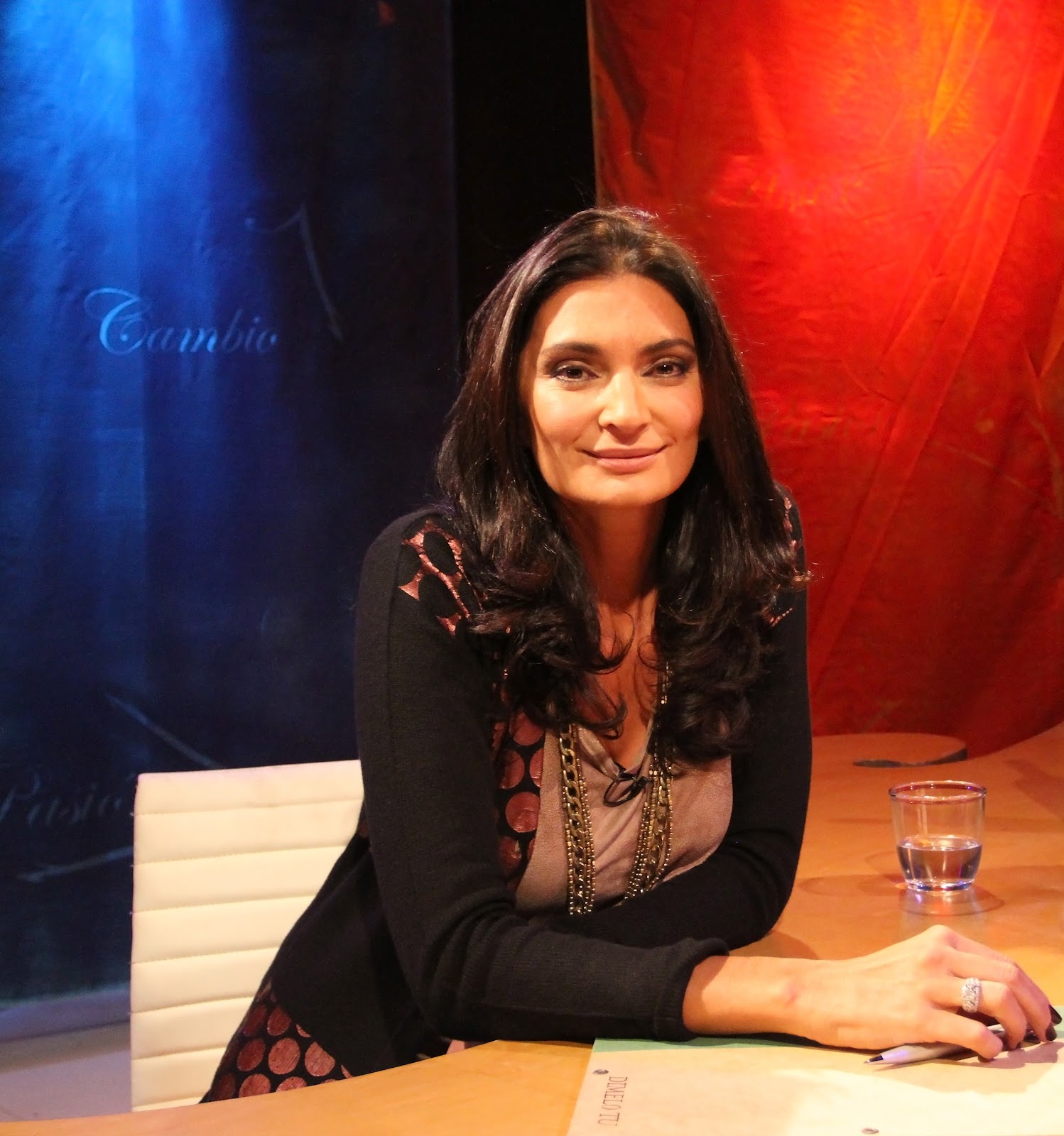
El periodista Andrew
Graham - Yooll en: 

Dímelo Tú,    
   una conversación íntima,
  con Mariana Arias


El 2 de abril de 1982, cuando vivía exiliado en Londres y trabajaba en la redacción del diario The Guardian, su jefe le anunció: “Volvés a Buenos Aires”. Durante tres meses fue corresponsal de la guerra de Malvinas para ese medio inglés. Y reunió sus categóricas crónicas en un libro esencial:   "Buenos Aires, otoño de 1982”.  

El ex director del  Buenos Aires Herald; hoy, ombudsman en Perfil; recuerda la guerra de Malvinas y ofrece, 30 años después, aspectos reveladores. Una entrevista imperdible, para reflexionar acerca de los años más oscuros que vivimos los argentinos. 

producción: Ariel Cuch / prensa: Laura Cebrián Scioli / fotografía: Photobucket


lunes, 12 de marzo de 2012

Argentina y sus presidentas

viernes 9 de marzo de 2012                                                            EL PAIS. com / La Comunidad
Despachos de Letras
por Antonio G. Maldonado  


Argentina y sus presidentas. Memoria del Miedo de Andrew Graham-Yooll.                 

De este miedo permanente, paralizante y opacado por los crímenes más atroces, los secuestros de niños y las torturas, habla uno de los mejores libros de crónicas sobre Argentina, sobre el América Latina en general.

Hablo de Memoria del miedo (Libros del Asteroide, 2006), del periodista angloargentino del Buenos Aires Herald (diario en inglés que llegó a dirigir) Andrew Graham-Yooll. Tal y como el autor afirma: "La crueldad ha arrasado el continente. Un continente que los escritores europeos no supieron comprender y que sólo unos pocos latinoamericanos han logrado desentrañar". Desde luego, él es uno de esos pocos.
Las crónicas incluídas en Memoria del miedo (que había sido anteriormente publicado en inglés, idioma en el que se publicaron muchas de ellas en distintos medios) abarcan el período comprendido entre 1973 (año del regreso de Perón de su exilio en Madrid), hasta el regreso del autor a Buenos Aires en 1980, tras su propio exilio en Londres, adonde se hubo de marchar tras las repetidas y creíbles amenazas.

De las ruedas de prensa clandestina de las guerrillas, hasta las amenazas que sufrió por parte de los grupos de extrema derecha afines al Gobierno por haberlas cubierto, de la muerte y desaparición de amigos y conocidos, da buena cuenta Graham-Yooll en su libro. Como botón de muestra de la atmósfera de delirio a veces surrealista que sacudió al país, baste leer lo relatado en el capítulo "El archivo fotográfico". Un fotógrafo de una revista de izquierda es secuestrado por un grupo de extrema derecha, se dirigen a Ezeiza a ejecutarlo, aunque antes deciden pasar por la revista para cerciorarse de que los descargos que sobre su trabajo hace el fotógrafo son ciertos. Finalmente, lo liberan, no sin la preceptiva dosis de humillación. No obstante, el fotógrafo recibe meses después una carta en su casa de parte de uno de sus secuestradores, quien le pide disculpas por el malentendido y lo invita a él y a su familia a cenar a un restaurante que acaba de abrir. Al llegar, allí lo reciben como a un viejo amigo. El jefe de los secuestradores es el dueño, y sus esbirros los camareros. Y él come tranquilamente como si estuviera en el bar de su mejor amigo.

Pese a esta anécdota, el clima del libro es otro. Una atmósfera opresiva que hace que, si bien sabemos de antemano que el autor sobrevivió, nos hace temer en cada capítulo que acabarán por matarlo. Dijo Graham Greene sobre Memoria del miedo: "Todos hemos conocido momentos de terror, pero nunca he leído un libro que transmita de tal forma lo que es vivir en un estado de terror permanente". 
"No existe nada no convencional en el camino hacia la muerte". Esa frase, escrita en otro capítulo del libro, describe cabalmente la Argentina del delirio de los 70 y principios de los 80. Libro fundamental para bajar al barro del día a día, opacado por los grandes personajes (Perón, Evita) y los grandes sucesos (matanza del Aeropuerto de Ezeiza, fuga de la cárcel de Trelew, golpe de Estado o guerra de las Malvinas).